
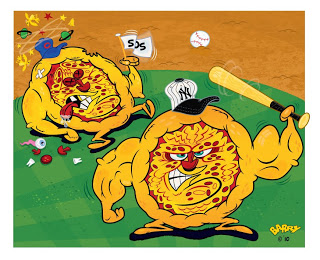
 If you’ve ever met someone from Chicago or New York, you’ve probably heard them rave about their hometown pizza. And you may have wondered if there really is any difference. After all, pizza is pizza, right?
Turns out, there are a few key differences in the two world-famous pie styles. And while New Yorkers wouldn’t think of calling that thick slab of dough and toppings from Chicago “pizza,” it turns out that the pizza found just about everywhere else in the U.S. is sort of a hybrid of the two. Here are some key differences you can look for next time you nosh on a slice.
The Crust – New York-style pizza features a thin and crispy crust that can be folded up like a sandwich for eating on the go. In Chicago, pizza is more of a knife and fork affair often a few inches deep, which would require some major support — and a lot of napkins — to eat by hand.
Topping Ratio – New York pizza features a thin layer of sauce, a sprinkle of cheese and minimal toppings, while Chicago adds a thick, hearty layer of sauce, lots of gooey cheese and tons of toppings. Both are delicious, but clearly they are not the same.
Oil Content – You won’t find a big puddle of grease on a Chicago-style pie, where the oils are distributed throughout the toppings and crust. But New Yorkers expect to find a pool of oil dripping off the top of each slice.
Type of Dough – Some deep-dish Chicago-style pizzas feature crust that resembles shortbread, crumbly from the addition of butter or olive oil. Other places make it thick, doughy and chewy. New York pizzerias stick to a basic oil, flour, and yeast mixture that can be chewy but never doughy, and is often crispy since it is so thin.
As you can see, while both Chicago and New York may call their traditional dish “pizza,” there is some considerable variation. But whether you are rolling up a slice of New York style on the run or sitting down to dig in to a Chicago deep dish, you are probably going to be happy either way. Because really, even bad pizza is pretty darn good.