
Great business innovations often come through the mingling and swapping of ideas. Check out this clever video, powerfully illustrating this point.
Author Archives: Ali Bonilla

No training, no change: Why you can’t overlook what people need
When great business initiatives fail to pan out, the short circuit often lies in the execution of the plan. A leader conceives a vision, bold ideas attract attention, and excitement builds. Soon, plans are coming together. Team spirit leads to a sense of excitement, and everyone’s going gangbusters! That is, until the business hits a common roadblock: a lack of training when it’s time to change the status quo.
Ben Horowitz, former director of product management at Netscape, was initially skeptical of the ROI the company would gain through investing in staff training. But that skepticism disappeared when Horowitz composed a short document, “Good Product Manager/Bad Product Manager,” which he used to communicate basic expectations to his staff. Managers he had once considered hopeless suddenly rose to high levels of performance. Soon he was managing the highest performing team in the company. Clearly communicating his vision and expectations had an astounding effect on the employees.
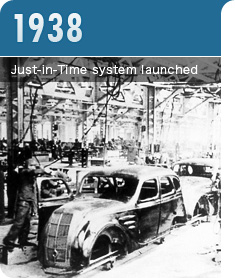 Over 50 years ago, Toyota developed a production system based on lean-manufacturing principles. The first step in their process was to “train the trainer.” Business process knowledge was then extended to managers and supervisors. The simple act of trainers training others, until organizational knowledge surrounds the business process, is practiced throughout the company today.
Don’t throw your business and employees off the dock without a life raft when you’re ready to implement a change initiative. Build a training document into your plan, and keep it current as your plan rolls out. As for the take-home lesson? Don’t underestimate the importance of training and communication as your company grows through change.
What does this martial art have to do with great leadership?
A growing number of executives are studying the Japanese martial art, aikido, to become better leaders. How does this ancient art apply to leadership? Check this out. (BTW, anyone know aikido?)
Middle managers a dying breed?
We’ve all related to the comedic portrayals of underlings and higher-ups in the Sunday funnies, but those laughs will be harder to come by as those hierarchical relationships begin to disappear. Sure, there’s still a boss, but today you’ll probably find the head honcho sitting at the same cafeteria table with the broom pusher.
 The traditional hierarchical arrangement of boss and underling has slowly morphed into more of a linear crew of collaborators. This change has been so rapid, and so widespread, it no longer seems odd to us.
There’s a couple reasons why management has changed in recent years. First, technological advancements have done away with many rote tasks that used to require people hours. And second, collaboration is now considered more effective than the top-to-bottom way of doing things.
This change has been in the works over the past decade, flattening out those hierarchical relationships that once reigned supreme. It used to be that the typical middle manager operated under a vertical structure, with the entry-level workers at the bottom, the CEO at the top, and a range of management sandwiched in between.
Walking into a company today, it may be hard to figure out who is actually in charge. You can no longer depend on dress code or nameplates to identify the middle manager — if they still work there at all. Perhaps these changes stem from the need to respond quickly to a mercurial business environment, in which major innovations occur not just once every few years, but in some cases, weekly or daily.
For the most part, the vanishing middle management position won’t be missed. For today’s businesses, it’s not about being the boss or the underling. It’s about moving forward using every available resource and working as a team.