
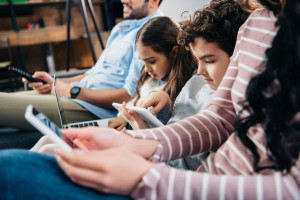
 Smartphones, tablets, laptops, etc. … they’re everywhere and they seem to be in the hands of the young and old. It’s not uncommon for a pre-teen to have a personal device. While a convenient source of information and entertainment, there’s a downside to such technology, especially as children’s brains and bodies are still developing.
Blue light, explained
As technology developed, an unintended consequences is the rise of certain conditions affecting our eye health and even quality of sleep. Specifically, digital eye strain and dry eye are 21st century problems associated with blue light exposure. Blue light is a color in the visible light spectrum that can be seen by human eyes. Blue light is a short wavelength, which means it produces higher amounts of energy. This reality is associated with negative impacts. For one, it’s known to interfere with the body’s circadian rhythm, what you know as your natural wake and sleep cycle. That’s why kids who don’t have boundaries around device usage can have related sleep issues.
So what’s exactly the reason for this phenomenon? During the day, blue light can be a good thing — it wakes us up and puts us on alert (The sun is actually a natural source of blue light.) But too much blue light exposure late at night can pose risk to sleep quality because it suppresses the production of certain hormones that regulate our body for sleep. That’s why experts recommend you power down your device up to three hours before bedtime.
Tips and tricks
Your adolescent clients might struggle with self-regulation and suffer from poor sleep quality as a result Here’s what you can do as a social worker to encourage a healthy relationship with technology:
- Many devices have nighttime settings that curb blue light exposure. Show them how to use dark mode so they can get in the habit of using this feature for sleep hygiene.
- While in school, they can make time for regular breaks using the “20-20-20″ rule: That means every 20 minutes they should shift their gaze to an object at least 20 feet away for at least 20 seconds. They can also use artificial tears (as recommended by an eye doctor) to add moisture and address the symptoms of dry eye.
- Encourage their parents to set and maintain healthy boundaries with respect to device use. For instance, maybe they have to forfeit their device at a certain time each day.
While ultimately it’s up to the parents to guide and model behavior, you can help by presenting this information to them.