
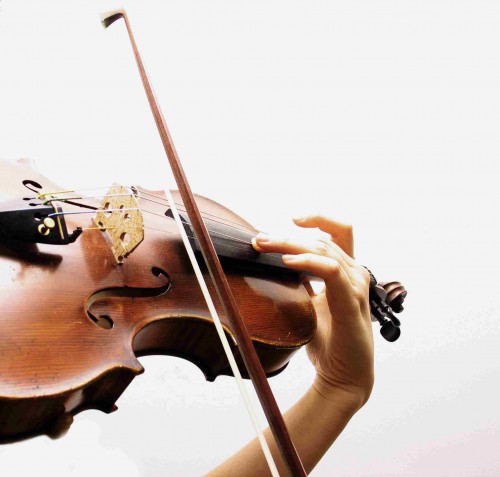
Violin shopping is not a package deal. A bow is typically not included in the violin purchase. Violinists usually buy their bows separately because the specifications are different for each violinist.
No one-size-fits-all bow exists. Whether buying your first bow or upgrading to a nicer one, doing your homework matters. Finding the right bow enhances the natural sound of your violin. Bow choice also reflects the violinist’s musical personality and should be specific to their preferences.
Choosing the right bow comes down to considering these factors:
Bow weight
Some violinists prefer playing with a lighter bow. It creates extra lift for playing off the string bow strokes such as spiccato. Others choose heavier bows to create more powerful sound. When you test bows, pay attention to two key factors –
- Bow contact: Does the bow make contact with the string naturally or do you need to work to achieve your desired bow stroke?
- Weight distribution: Is the bow heavier at the tip? If so, balancing the bow may create extra work while performing intricate bow strokes. Is it too light? This can make it difficult to play forte or with gusto.
Texture
How does the bow feel when it hits the string? That impacts how a violinist plays. When you go bow shopping, select 5 to 10 bows and play the same passage of music with each one. Note how each bow feels while playing that music. Repeat the test with another passage of music using a different bow stroke. A bow should work for a wide repertoire of major bow strokes, techniques, and dynamics. Test staccato, long bowing, short bowing, loud bowing, soft bowing, playing in the higher positions and on the lower strings. A good bow should help you perform these without tiring your hand.
Feel
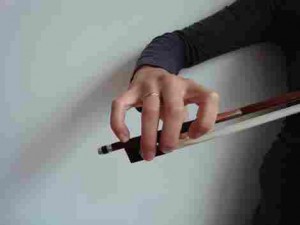
How a bow feels in your hand greatly influences how you play. How does your hand respond to holding it? Do your fingers struggle to grip the bow or wrap around the wood? Does your thumb fit properly in between the wood and hair? Many bows offer subtle variations corresponding to a person’s hand size, so it’s important to choose one that will work best with your hand while you are playing.
Use the same violin to test each bow while bow shopping. Each violin sounds different and the combination between the bow and violin vary. That’s why it is important to ensure techniques will work to enhance your own violin’s sound.
Always choose a bow that will best complement your own violin and playing style. You want to own a bow that fits your personal technique and that will ultimately help you sound your very best.