
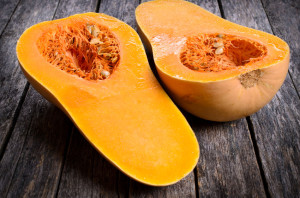
 Nothing says fall quite like winter squash! Which is your favorite variety? In addition to being delicious, all types of winter squash are high in alpha-carotene and beta-carotene, which convert to Vitamin A. They also are high in Vitamin C, other vitamins, fiber and antioxidants.
Unlike summer squash (like zucchini), winter squash is harvested in the fall, and they have a hard shell. Here are four popular types of winter squash and some great ways to enjoy their unique flavors. We challenge you to try one you haven’t tasted before!
Butternut Squash
This odd-shaped gourd is packed with vitamins A and C and has a sweet, nutty taste. Try this butternut squash soup as a great starter to any meal. Tip: Stab your squash with a fork all over and microwave for about four minutes to make it easier to peel. Here are some more ways to enjoy this nutritious vegetable. Like all winter squash varieties, you do not need to refrigerate them until they are cut open. They store longer than summer squash, up to a month or more, if they are kept in a cool and dry spot.
Pumpkin
Not just for jack-o-lanterns! There’s no need to buy pumpkin puree from a can when you can make your own with a freshly picked pumpkin. And while you’ll find plenty of sweet pumpkin treats (cookies, quick bread), try a savory twist with this pumpkin risotto. Don’t forget to keep the seeds and roast them for a tasty snack.
Acorn Squash
This smaller squash is a great source of fiber and potassium, and it’s often paired with the flavor of maple (like in this maple bacon roasted acorn squash recipe). Of all the winter squash varieties, acorn quash is the most jam-packed with vitamins and other healthy nutrients. Opt for the smaller acorn squashes; they tend to be more tender and cook more evenly. Love the flavor of acorn squash? Try it in one of these recipes.
Spaghetti Squash
Getting its name from the distinct stringy texture of the flesh, spaghetti squash is a great low-calorie source of vitamin A and beta carotene. You can use spaghetti squash “noodles” in place of pasta, like in this shrimp scampi recipe. Tip: cut the squash crosswise (instead of end to end) for longer strands. Remove the seeds.
Ready for some more squash recipes? Take a look at this collection of 50 great recipes from Taste of Home magazine.
Congratulations, you are now a certified squash expert! Stop by our store to pick up some squash today.