 During World War II an old joke used to circulate in British pubs that American Air Force colonels under 21 needed to be accompanied by their parents. The joke was based on the Air Force’s policy of giving young officers plenty of opportunities to rise in the ranks.
But as Time magazine noted in its June 19, 1944 issue, the ‘Army’s air arm outdid itself by elevating (with President Roosevelt’s approval) two colonels still in their late twenties, to the rank of Brigadier General.
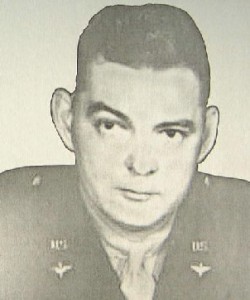
At 28 years-old, Salt Lake City native Richard Condie Sanders, who was a second lieutenant less than four years ago, became the youngest general in the Army, and ‘probably the youngest since Custer.’ His name was on a list sent to the U.S. Senate naming twenty-one brigadier generals for promotion to the rank of major general and sixty-three colonels who became brigadier generals. Sanders was commander of the 98th Bombardment Wing in Europe at the time.
Sanders was born in Salt Lake City in 1915 and graduated from the University of Utah in 1937. He was appointed a second lieutenant in the Field Artillery Reserve in 1936 while still in college. Sanders was with the 5th Infantry Brigade on Civilian Conservation Corps Duty at Camp Soda Springs in Yakima, Washington when he enlisted as a flying cadet. Upon completion of his flight training, he was commissioned a second lieutenant in the Air Reserve in August 1939 and was later called to active duty in the regular Army Air Corps in July 1940. Sanders served at Langley Field, Virginia, and Greenville Army Air Base in South Carolina, and was later assigned to the Tenth Air Force.
In 1942, Sanders was selected for the famous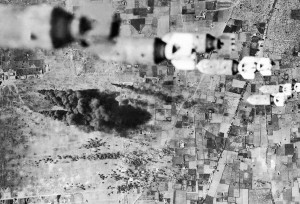 and was deployed to Egypt to help beat back the onslaught of Rommel’s Afrika Corps, which were pushing toward Cairo. Sanders led his squadron in dozens of bombing raids against Tobruk, Bhengazi Tripoli, and shipping targets in the Mediterranean, as well as the famous battle of El Alamein. This proved to be the battle that turned the tide in Africa in the Allies favor.
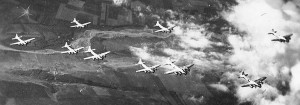 Sanders later served as executive officer of a B-26 group in Europe’s Ninth Air Division in 1944, becoming the group’s chief of staff, and eventually, its commander.
In August 1945, he became commanding general of the 99th Bomber Group in Germany. He was awarded the Distinguished Flying Cross in 1943 for extraordinary achievement in aerial flights against the enemy in the Middle East theater, Air Medal Distinguished Service Medal in 1946, two oak leaf clusters, and medals from Belgium, France and Luxembourg.
Sanders finished out his military career as commander of the Air Forces Personnel Distribution Command in Louisville, Kentucky. He retired on July 1, 1950. You can learn more about Sanders at the Utah Aviation Hall of Fame section at Hill Aerospace Museum.