
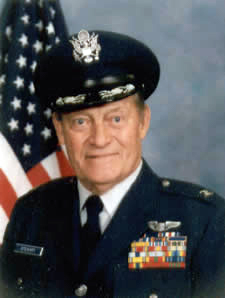
 Walter Stewart piloted his B-24 Liberator “Utah Man” on one of the most historic bombing missions of World War II. The Benjamin, Utah native was deputy leader of a group of bombers which took off from Libya on August 1, 1943 on a 2,000-mile round-trip low-level bombing mission to take out the Ploesti oil refineries in Romania.
Petroleum production fields were among the highest priority targets for Allied planners. Ploesti, which was located about 30 miles of Bucharest, supplied as much as 60 percent of the fuel to the Nazi war machine. Taking it out would deal a severe blow to Germany’s ability to carry on the war.
Hitting the oil fields at Ploesti would not be easy. The facility was outside the range of bomber bases in England and would have to be reached by bombers flying from the Middle East or Africa. It was also one of the most heavily defended targets in Europe. The refineries were surrounded by hundreds of anti-aircraft emplacements, defending aircraft, and specially made freight cars whose sides dropped to reveal more anti-aircraft guns.
After weeks of practicing at low flying levels, a force of 178 B-24s took off from Libya and headed across the Mediterranean as part of Operation Tidal Wave. This was Stewart’s 31st combat mission. “We were scared to death, but you really don’t let that bother you,” Stewart said. The mission ran into trouble right away when one of the lead groups made a wrong turn forcing the groups to attack the refineries from all quadrants. The bombers encountered heavy flak and came under attack from defending fighter aircraft.
Stewart’s group commander and his right wing man were both shot down leaving Stewart to lead the bombers behind him to the target. Flying fifty feet above the smokestacks, the B-24s dropped their bombs. “We were excited when we saw the huge columns of smoke rise up behind us,” Stewart said. “We were yelling at each other.” Later surveillance flights found that the results were less than expected, but the attack managed to destroy 42 percent of the refining capacity.
Stewart’s plane barely made it back to base. “Utah Man” had 365 holes in it and nearly ran out of fuel. Of the 178 bombers that flew on the mission, 54 were shot down and 200 airmen were killed. Another 300 were captured. The U.S. Army Air Forces never attempted another low-level bombing mission again.
Stewart flew one more mission after Ploesti before being rotated back home where he toured facilities in support of the war effort. “Utah Man” was later shot down two raids later and its crew lost. Stewart continued flying after the war and retired as a colonel after 36 years in the Air Force. He was awarded the Distinguished Service Cross for his role in the Ploesti raid.