
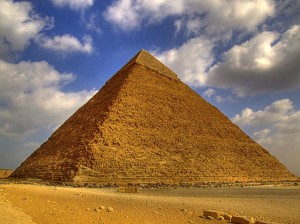
 When you think of Ancient Egypt, what comes to mind?
Probably several things, right?
Hieroglyphics, the pyramids at Giza, the Sphynx and commerce on the Nile. Oh, yes … there’s also King Tutankhamun, or King Tut as we refer to him today. The “boy king” was only 18 when he died, yet his legend lives on to this day. Why is that, exactly? There are several reasons, but the most prominent one is his ornate tomb, his gold death mask and the riches buried with him.
How was King Tut’s tomb found?
British archeologist Howard Carter is credited with the discovery of King Tut’s tomb. In 1918, he arrived in Egypt’s “Valley of the Kings” with one goal in mind: to find the boy king. At the time, there were rumors that the tomb was in the area, but no solid proof. Several years into his search, while exploring the remnants of the tomb of King Ramses VI, Howard stumbled upon steps to a hidden burial room.
What was inside King Tut’s tomb?
On Nov. 26, 1922, Carter, joined by fellow archaeologist Lord Carnarvon, broke through the inner chambers of the tomb and made an incredible discovery: walls layered in gold, a three-piece sarcophagus covered in red quartzite and a solid gold death mask weighing 240 pounds. The death mask contained highlights of lapis lazuli as well as eyes made of obsidian and quartz.
Although the findings were thousands of years old, everything remained in perfect condition, as though frozen in time. Now, these relics are stored in the Cairo Museum. Every year, millions of people from all over the world travel to Egypt to view King Tut’s treasures for themselves.
Could more treasures like these lie beneath the desert floor in the Valley of the Kings?
Experts theorize that it’s not only possible but probable. When will they turn up? No one knows for sure, but archaeologists continue their investigations to this day.