
For years we’ve seen food labels on various products in the supermarket. But, a label is only good if you actually know how to read it. Here’s a brief overview of how to understand a food label.
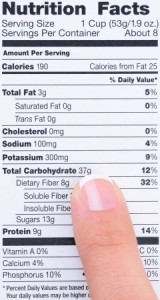 First, be sure you look at the size of a single serving and how many servings are in the package to help you determine how many servings you’re actually consuming. Chances are, it’s more than you think!
If you double the servings you eat, you double the calories and nutrients, including the Percent Daily Value (% DV). The % DV section tells you the percent of each nutrient in a single serving in terms of the daily recommended amount. In general, opt for high-fiber and low sodium foods.
In addition to the Nutrition Facts label, a lot of foods today come with claims from the manufacturer. You’ll see these on TV and in other media. They are strictly defined by the FDA. Such claims include calorie-free, low-fat, reduced cholesterol, etc. If you’re not sure what the term means, it’s best to look it up. After all, you have a right to know what you’re putting in your body!