
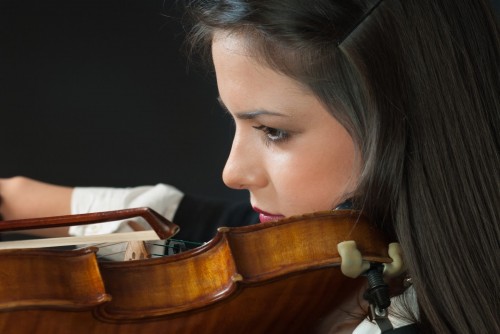
Any serious violinist knows mastering the violin requires extensive practice. While practicing allows a violinist to achieve his or her goals, it can take a serious toll on the neck. Using proper stretches helps a violinist to achieve success without pain.
Playing the violin is a competitive art. Some violinists spend 10 to 12 hours per day devoted to their craft. It comes at a cost. Some neck muscles remain stationary. Others are in perpetual motion. Keeping your neck healthy and able to maintain such a practice schedule should factor into your daily routine.

Taking breaks
For every hour practiced, violinists should take a five minute break. Walking around allows for better circulation, and helps a violinist feel more focused and invigorated. Rather than staying in the practice room all day, schedule a 5-minute walk each hour.
Neck care
Your neck works overtime when you play the violin. With the placement of the violin, muscles on the left side of the neck remain contracted, while muscles on the right side become hyper-extended, increasing risks for developing muscle cramps, spasms or lock-ups. Doing three specific stretches can help keep your neck in good shape.
1. Turn your head to one side and point the tip of your nose toward the armpit. While doing so, you should feel a deep stretch behind the neck. Hold this stretch for 30-90 seconds.
2. Let your ear fall toward your shoulder. You should feel a deep stretch in the middle of the neck, extending deep into the spine. Hold this stretch for 30-90 seconds.
3. Turn your head to the same side and look upward. You should feel this stretch at the front of the neck. Hold this stretch for 30-90 seconds.
Repeat these three stretches on the other side of your neck.

Besides stretching, you can care for your neck other ways during violin practice:
Movement: Moving your neck around while it is not supporting the instrument is important. Stretches can be done more frequently if muscles become stiff or sore.
Maintain good posture: Keep your shoulders back and spine limber and loose during practice. Always avoid locking your knees.
Relaxation: Violinists improve performance quality by relaxing their muscles while playing. It creates better sound and prevents injury. Maintaining a relaxed stance may sound contrary to playing the violin, but relaxed muscles help you play better.
No clenching: Always rest your violin on your shoulder. Balance it using your arm and chin, but never clench it between these points. Balancing helps your muscles to relax. This makes your fingers more limber and easier to move, so you can perform technical elements and intricate bow strokes. Clenched and tight fingers restrict movement. Relaxing your right hand allows more accurate bow strokes, especially on more intricate ones, such as spiccato or staccato.