
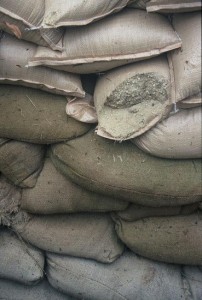
 Sandbags seem simple enough, right? But if you ever find yourself in the path of an impeding flood, you probably should know a few tricks about how to keep you home safe, sound and not soggy.
First, protecting you home or neighborhood with a sandbag dike isn’t a one-man job. In fact, it’s probably not a two-man or ten-man job either. Steering away a serious flood is going to take a community effort consisting of several dozen – or even several hundred – volunteers. It all depends on how high the flood waters are expected to rise and how long your man-made channel needs to extend.
So coordinate with your community. Many municipalities have emergency response coordinators who can help. In the meantime, here are some dike-building techniques that will ensure that your flood barrier — and your back — doesn’t break.
When piling sandbags, you (and fellow volunteers) should take extra care when it comes to lifting and passing sandbags. Sandbags are heavy, so avoid bending over to pick them up. You should never bend any of your joints more than 20 degrees while picking up a sandbag.
When carrying and passing sandbags, you should keep the sandbags between your shoulders and your knees. Avoid reaching your arms to pass them. A volunteer with a hurt back won’t be of much help to anyone during dike construction or a flood.
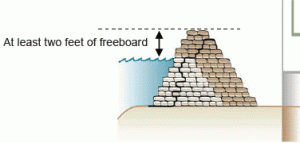 When piling sandbags, the wall should be much wider at the bottom than the top. The dike should be at least two feet taller than the expected water level. As for the base, make sure that it is two feet wider than the height of the dike (or the stack may tumble over after a good soaking).
Hopefully you don’t find yourself in some of the same soggy circumstances that homeowners in other parts of the country have recently found themselves in. But you can find some additional info on flood preparation and dike construction at this site, along with some helpful diagrams to guide your piling of sandbags.