
What’s a bit of dust on the job amount to? Many employers may not realize dust can be a serious health problem for construction workers. The most common form of dust on a construction site is crystalline silica — the compound found in sand, quartz flint and slate. If ingested over prolonged periods of time, workers may contract Silicosis, an incurable lung disease caused by breathing in silica dust.
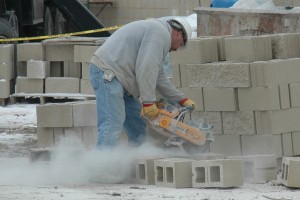 In the uncut solid state, each of these materials is perfectly harmless. The danger comes from crushing, sanding, grinding or cutting the concrete, as doing so releases the silica particles into the air. Because these activities are common practices on construction sites, the need for better safety precautions should be plainly evident. Yet, ironically a series of reports reveal more and more workers are coming down with Silicosis simply because construction companies are not taking this problem as seriously as they should. The potential ramifications should spur foremen to do more to ensure worker safety.

The National Institute for Occupational Safety and Health (NIOSH) defines the exposure limit for airborne crystalline silica as .05 mg/cubic meter for up to 10 hours per day during a typical 40-hour work week. In an effort to control silica dust, the Department for Occupational Safety and Health (OSHA) suggests using personal ventilation masts, hosing down the area with water (wet cutting), exhaust ventilation and installing dust-collection systems on equipment. Failure to practice safe concrete-cutting protocols may result in a fine as high as $70,000.
Are you staying on top of silica-dust management on your sites? Do your workers know how to protect themselves and why it is important to their long-term health? If the answer to either of these questions is no, you should definitely look into liability risks you may be incurring without even realizing it. Think about it: You could be saving dozens of people from lung disease by taking simple steps to protect your work crew.