
 Isn’t it amazing how much fuel mileage has improved as those super-fuel efficient vehicles crowd out the road hogs? Did you know the same holds true in the financial realm? You can get more mileage out of your take-home pay through applying a scientific approach to cash management.
Consider that as a group, we Americans waste a 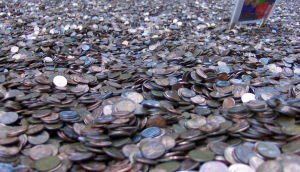 away because it seems like it is just too much trouble to keep track of it. Sounds crazy, doesn’t it? Here’s one way to understand the psychology behind squandering cash.
While you are walking down the street, if a $20 bill blows in front of your path on a windy day, I bet you would chase after it with a big smile on your face and spend at least a minute or two daydreaming about how you might use the unexpected cash. We’ll come back to this idea in a bit.
Going back to the faucet analogy, consider that a faucet dripping one drop per second would waste 27,000 gallons of water annually. This waste-it-don’t-save-it mind trap is a phenomenon well understood by utility companies because they know the impact of a few pennies spent on inefficient HVAC equipment multiplied many times over chips away at America’s energy reserves.
And when you consider what would happen if that misspent cash was invested in a business or another type of equity, the waste is then multiplied, further exacerbating the impact of all those missed opportunities to grow that capital.
Let’s say you misspend $10 a day. That’s not hard for the average American to do. Say goodbye to $3,650 a year that could be invested in various equities, including your own business. Why do you expend the energy to chase a $20 bill that rolls past your feet on a windy day and on the other hand burn through several thousand dollars annually on seemingly inconsequential purchases you cannot even remember making just three days later?
Wasting food, money or time: All three add up to a misspent life unless you get it under control. There’s another way: Learn to see money as a vital path to a more satisfying, purposeful life. Whether you’re a recent graduate of a professional school or an aspiring entrepreneur aiming to put that ‘spare change’ to work fueling your dreams, start looking at spare change as one ticket to your future.