 In July 1967, U.S. Air Force planners became alarmed when the Soviet Union unveiled its new MiG-25 Foxbat during an air show at Domodedovo airport south of Moscow. The twin-finned Foxbat had two engines, two vertical stabilizers, and reached a speed of greater than Mach 2. Fearful of losing air superiority in the Cold War, the U.S. responded by developing the F-15.
Computerprojections by McDonnell Douglas predicted that the F-15 would easily beat many of the climb-time records. Climb-time or time-to describes the time it takes for an aircraft to climb to a certain height.
During the winter of 1974-75, the Air Force initiated the Strike Eagle program at Grand Forks Air Force Base in Grand Forks, North Dakota since the F-15 was an all weather fighter, to set new time-to altitude records using the F-15. The “Strike Eagle,” which weighed 31,908 pounds, was the first fighter jet to have an engine thrust greater than the normal weight of the aircraft – nearly 40 percent more. The plane was stripped of its gun, radar, tail hook, one generator, some avionics, some of the hydraulic system, and the flap and speed brake actuator, as well as 40 pounds of external paint.
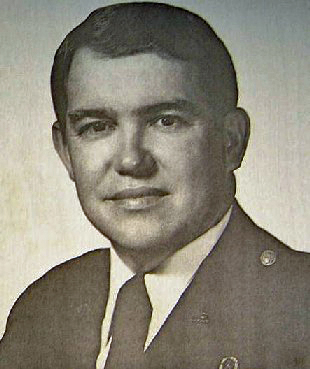
Three USAF pilots were chosen to pilot the modified F-15 – Major Roger Smith, Major David Peterson, and Major Willard MacFarlane of Utah. Between January 16 and February 1, 1975, the F-15 broke eight time-to-climb world records, shattering records previously held by the F-4 and MiG-25. It reached an altitude of 98,425 feet just 3 minutes and 27.8 seconds from brake release to takeoff and coasted to nearly 103,000 feet before descending. A single flight by MacFarlane broke three records when the plane reached sonic speed only 19 seconds after takeoff.
All three pilots were awarded the MacKay Trophy by the U.S. Air Force for the most meritorious flight of the year.