
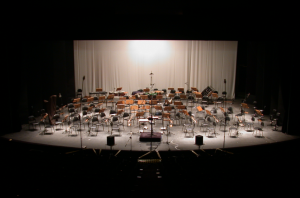
 Did you know that orchestral musicians are more likely than rock musicians to suffer hearing loss? It doesn’t seem fair, does it? Hearing damage arises from cumulative exposures over time. A professional classical musician plays anywhere from five to ten hours a day, taking performance, practice, and instruction into consideration.
That’s in stark contrast to your average rock musician, who may get together with their fellow band members just once or twice a week. The prolonged exposure to high levels of sound eventually takes a toll on our ears. It also depends on the genes we were blessed with, as well as the habits we cultivate that expose our ears to loud, or prolonged noise (like mowing the lawn without ear plugs). Both lifestyle and profession determine our long-term hearing health.
I’m sure we’ve all been to events that leave our ears ringing or buzzing afterwards. The medical term is tinnitus, and it’s a sign that our auditory anatomical structures in the inner ear have sustained damage. Depending on the length and intensity of the event, you may experience temporary hearing loss along with the ringing. This is called a noise-induced temporary threshold shift, or auditory fatigue. If you give your ears a 14-hour rest after such an event, you’ll usually regain auditory function. However, exposing yourself to tinnitus-inducing episodes on a regular basis will result in the slow deterioration of your ear’s organs. This is referred to as a permanent noise-induced threshold shift.
Presbycusis is that gradual hearing loss that happens as you age. It is fairly common and may be due to heredity as well as years of exposure to loud noises. Half of the people aged 75 or older have some degree of hearing loss.
Our outer ear funnels sound waves into our eardrum, which sits between the ear canal and the middle ear. The eardrum vibrates and passes those vibrations on to three tiny bones housed in the middle ear: the malleus (hammer), the incus (anvil), and the stapes (stirrups). These tiny bones amplify the vibrations and pass them along to the inner ear through to the fluid in the cochlea. There are thousands of miniscule hairs attached to nerve cells in the cochlea. These hairs translate the sound vibrations into electrical signals that travel through the auditory nerve to the brain.
Sensorineural hearing loss occurs when repeated exposure to loud noises damages these tiny hair cells. This type of hearing loss cannot be reversed. High frequency detection is the first to go, making it difficult to understand women and children, whose utterances are in the treble range. Roughly half of all musicians can expect some degree of hearing loss, but using good sense minimizes the risk. Some orchestras have invested in plexiglas shields, placing them in front of the brass and tympani sections, but most do not. For the avid musician, investing in a pair of musician’s earplugs might be a good idea.