
Do south-facing windows in homes situated in the Northern Hemisphere receive the most sun exposure? Many people assume that’s the case, because a Southern exposure has a more direct orientation to the sun.
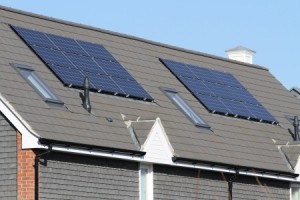 But the folks at Pecan Street Research Institute in Austin, Texas have discovered evidence to the contrary. In a recent study, findings suggested that pointing solar panels west instead of south may be more efficient, resulting in a greater reduction in energy costs.
For those in homes with west-facing panels, residents realized a 64 percent drop in electricity usage in the home compared to the 54 percent seen in south-facing solar panels. If you’re wondering why, the answer is surprisingly simple: Lifestyle. Everyday, millions of Americans leave for work in the morning, and do not return home until day’s end. Consequently, peak energy usage does not occur until late afternoon and early evening. In Texas, where the study was conducted, peak energy usage usually happens between the hours of 3 p.m. and 7 p.m.
West-facing solar panels see more late-in-the-day sunshine than south-facing panels. They reach their peak power production when homeowners are using more electricity. While the west-facing solar panels did generate 2 percent more electricity overall than south-facing panels, the more significant figure is the 49 percent increase in electricity that western panels produced during those peak demand hours.
One caveat: These results arise from a single study involving only 50 homes. Results are far from definitive. However, if utility companies decide to institute dynamic-driven pricing for electricity by charging more per kilowatt-hour during peak times, west-facing panels may become an enticing option for homeowners.