
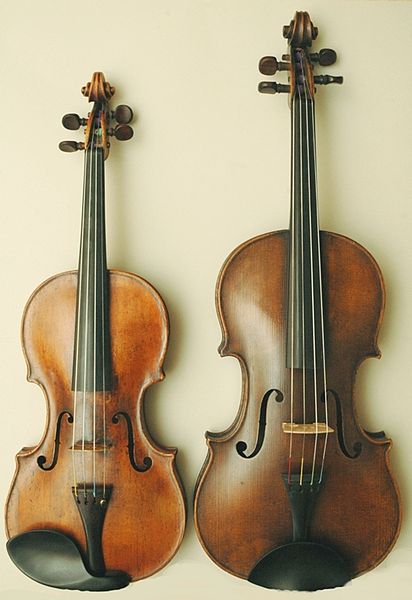
 It’s pretty obvious what the most important component of the stringed instrument is. Creating and manipulating vibrations in the strings is what produces the music we so love; it is the purpose of the instrument’s design, and the end result of tireless hours of effort on the part of the musician – all because we like how the vibrations sound.
Strings can be made of nylon, steel, gut, or other materials, which are tailored to the body of the instrument, be it violin, viola, cello, or double bass. You may know one of these instruments intimately, but how well do you know the others? Turns out, they have quite a bit in common, but each has its own unique attributes.
Each of these stringed instruments has a hollow, wooden body which serves as a sound resonating chamber. The bridge is designed to elevate the strings the correct distance from the body, and to hold them the necessary distance from each other.
Violins, which make the highest noise and have the shortest strings, are typically two feet long and are played with a slightly longer bow. One hand, usually the left, presses down on the strings at the neck to change the pitch, while the other moves the bow across the strings to produce the vibrations. Plucking the strings produces a different sort of vibration. The viola is a little over two feet, larger than the violin. It has thicker strings whose vibrations create a richer sound.
The cello is roughly four feet long with thicker strings than both the violin and viola. The cello, most similar in range to the human voice, is capable of shaping a large assortment of tones, from low mournful sounds to higher, brighter notes. The double bass is over six feet long, its wooden body accommodating long, thick strings that allow very low notes.
Regular string replacement is essential to quality sound production. Some avid players replace their strings every several months, but for most students, yearly replacements are sufficient (even strings that are not played regularly deteriorate and need to be replaced from time to time – they are under a lot of tension simply being attached to the instrument, played or not). Strings are best replaced one at a time, while ensuring the bridge does not begin to lean. Removing all strings simultaneously could cause the soundpost or fingerboard to collapse.
It’s a good idea to keep an entire set of strings as spares (it may save you a headache on performance days) to use when one of your strings frays, produces a false sound, or snaps entirely. Once you’ve replaced a string, be sure to replace the spare.
Just as important as the strings is the bow you use to play them. Get a good quality bow and rehair it regularly. Bows should be rehaired every six to eighteen months (the more you play, the more frequently you should rehair).