
 Does a longer working career help prevent Alzheimer’s? Researchers are finding that active retirement may stave off those ‘senior’ moments. Most adults over the age of 50 have experienced those annoying, though harmless, memory lapses. Yet with all the publicity surrounding the increasing number of senility cases, many adults wonder if those lapses just might be a precursor to the dreaded diagnosis of Alzheimer’s.
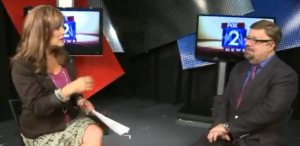
Active retirement does seem to have a positive correlation with maintaining healthier brain function. According to Dr. George Grossberg, SLU-Care geriatric psychiatrist, it’s all a matter of the degree to which a particular individual is affected. He says when those forgetful episodes occur, as long as they are not interfering with a senior’s overall ability to function day-to-day, there’s no need for alarm.
Researchers do know an active retirement has been correlated with a dramatic decrease in the risk of Alzheimer’s, although all the reasons for that finding are still not fully understood. Experiencing those senior moments do pose a risk factor, but he says to keep in mind it’s all a matter of degree. If these senior moments are interfering with the ability to function each day, it may be a precursor to prodromal Alzheimer’s, he says.
Around 5,000 researchers in 60 countries are actively sharing research findings in a quest to prevent the devastating effects of advanced Alzheimer’s. Putting off retirement appears to be a major factor in the onset of this dreaded disease. Grossberg says that for every year one puts off retirement beyond the age of 65, it lowers the risk of this debilitating condition by around three percent.