Consider your basement for a minute. When you think of a free afternoon lounging in the lowest level of your home, are you thrilled at the thought of spending some time in your cozy “man cave” or indulging yourself with an afternoon in your comfortable craft room? Or does an afternoon in your basement feel more like a prison sentence?
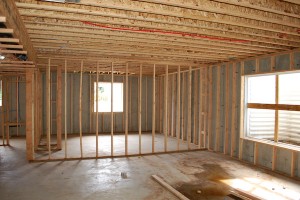
While highly unlikely, you may not have realized that having an unfinished basement in a home is almost like sitting on a gold mine – both in relation to increasing the living space, comfort, and usability of your home, but also because it can so dramatically increase the value of your property. Inevitably, if you take the leap and finish your basement, you may start with evaluating how to cover that barren concrete floor. Think again. Why assume that hiding the concrete under carpeting or other flooring options is the best way to strike it rich in terms of value and resale potential?
Let’s introduce you to five myths about concrete basement floors and the simplistic basement-floor finishing options you may not even realize you have.
Myth #1: Bare concrete floors are cold and damp
With more stringent building codes and the newer and more advanced insulation material options, bare concrete floors do not have to be cold nor damp.
Myth #2: Cracks in concrete are inevitable and it’s better to cover them up than to live with them
Unless there are structural issues causing the cracks, they can be embraced with a finish that brings a unique and warm rustic feel to your space. If you feel the cracks are more of an eyesore, they can be finished with a multi-ingredient cement overlay, and you can usually still finish them off with your preferred method and style.
Myth #3: Decorative concrete floors are slippery
Finished concrete floors don’t have to be any more slippery than tile, linoleum, or wood. If you anticipate the high-gloss finish will be a problem, no-slip agents can be added during the application.
Myth #4: Carpeting looks warmer and more inviting than concrete
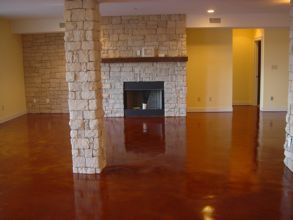 Imagine a warm-toned floor throughout your entire basement. With options galore, you can spiff up that floor and don’t ever have to deal with things like allergens and chemical emissions from carpets.
Myth #5: Concrete floors end up making the room too loud
Inevitably, concrete floors can be loud and produce an echo effect, but no more so than ceramic tile, natural stone flooring, and some hardwood or bamboo floors.
Perhaps these busted myths shift your whole thought process on finishing your basement. Whether a short term or long term option, being on top of the concrete floor trends can provide you some options you may not have been aware you had.
Concrete is hard, yes, but as a result it’s stain resistant, durable, and resistant to abrasions. Moving forward, don’t look at how quickly you can cover it up, start with considering the resource as it already is.