Did the weight of the summer heat prevent you from working on your concrete projects? The more moderate fall and winter air can breathe comfort into your project, but can also impact the steps you’ll need to take to get the job done right.
While it may depend on where you live you’re probably not laying any concrete in the dead of winter. If the opportunity presents itself, and the timing seems ideal, these tips about cold weather concrete may be useful.
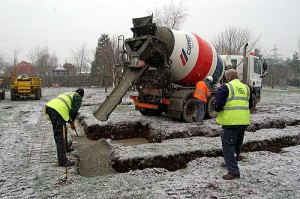
There are two main problems with concrete in cold weather:
Concrete can freeze before it gains strength from setting up properly.
Concrete sets more slowly when it is cold—very slow below 50°F. And if laid in temperatures below 40°F, the solidification basically stops and the concrete doesn’t gain the strength it will need to last.
These two figures specifically reference the temperature of the concrete, rather than the air. In order to counteract the issue of cold, you just have to plan your project in a way where you can protect the concrete from the cold while it’s setting up. To properly lay lasting concrete in the cold, you’ll need to change the mix to get it to set more quickly or protect the concrete from the cold—or more likely, both.
Additionally, we’ve included some more tips:
- Never lay concrete onto frozen ground.
- Remove ice and snow from areas where concrete will be laid.
- Warm up your tools, or anything that will come in contact with the concrete.
- Once laid, cover concrete with blankets or tarps to keep in temperatures and to protect it while setting up.
So you beat the cold and laid the concrete and didn’t even have to wipe a single bead of sweat off your brow. The final consideration is concrete sealant. If your project requires this layer of protection, keep an even closer eye on the thermometer. As a general rule, 50°F is the minimum air and surface temperature needed when applying most concrete sealers and coatings.
With the employment of some of these tips and tricks, your cool-air project can come off without a hitch. Keep an eye on your material throughout the process and don’t hesitate to ask the experts if you run into problems that you did not expect.