Chase Nielsen’s legacy left its mark in history and he is hailed as one of Utah’s greatest WWII heroes. The Hyrum native was one of 80 volunteers who flew on a secret mission that dropped bombs over Tokyo in 1942 in what later became known as the “Doolittle Raid.”
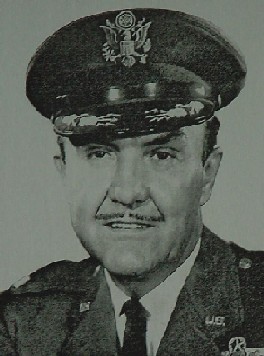
Nielsen graduated from Utah State University in 1939 with a degree in civil engineering and enlisted in the U.S. Army Air Corps. He became the navigator of Crew Number 6, one of 16 B-25 Mitchell bombers chosen to hit Japan that were launched from the deck of the U.S.S. Hornet on April 18, 1942.
The mission was led by Lt. Colonel Jimmy Doolittle and personally ordered by President Franklin Roosevelt as a response to Japan’s sneak attack on Pearl Harbor five months earlier. Nielsen recalled the excitement of that day: “There were five extra crews and everyone wanted to go. One individual offered $1,000 to anyone willing to give up his seat, but there were no takers. And back then, that was a lot of money.”
The raiders were forced to take off early — 200 miles further out from the Japanese mainland than planned — after the carrier group was spotted by Japanese picket boats. All sixteen planes successfully hit their targets in Tokyo and several other cities. Plans originally called for the planes to land at airfields in China, but because they had been forced to take off farther from Japan than planned, the planes ran out of fuel. The airmen were forced into a bind: Attempt a crash landing at night or ditch their planes and bail out over the Chinese coast.
One of the planes made it to Russia. Eleven of the 15 remaining crew bailed out and the other four crash-landed. Nielsen was in one of the planes that ditched off the coast of occupied China in the East China Sea. Two crewmen were killed. Nielsen says he remembered standing on top of the downed bomber. Their life raft wouldn’t inflate and the men were subsequently separated and swept away by the waves. The survivors reached the shore and were hidden by sympathetic Chinese nationals. Nielsen soon joined up with his pilot and co-pilot. “The next thing I remember, I woke up on the coast thinking, ‘What the heck am I doing here?’” Nielsen said.
Nielsen was finally rescued at the end of the war and brought back to the U.S. He later testified during the war crimes trials that helped convict Japanese officers of mistreatment and murder of prisoners. Following World War II, Nielsen rose through the ranks and helped build up the Strategic Air Command. He retired from the Air Force in 1961 as a lieutenant colonel and worked as an industrial engineer at Hill Air Force Base, retiring in 1981. Nielsen attended annual reunions of the Doolittle Raiders and enjoyed giving talks about the experience.
“I am proud to have been on the Doolittle Raid,” he said in 2006. “I am more proud to have been of service to my country. I hope and pray that what we Doolittle Raiders have done will be an inspiration.” Nielsen was later captured by the Japanese and along with five other raiders became a prisoner of war. He was taken to Tokyo and repeatedly tortured for information, but only gave up his name, rank, and serial number. Nielsen had bamboo splints shoved under his fingernails, which were then lit on fire. He also had the bottoms of his feet burned with hot coals.
“Being a prisoner was something I had never prepared for,” Nielsen said. “No one knew we had been captured, so they felt they could do whatever they wanted – torture us, execute us. The hardest part was the thought that no one would ever know how I had died.” Three of the eight airmen were executed after a trial by a firing squad. A fourth would later die in confinement. Nielsen himself was sentenced to die but was commuted to life in prison. He was held in solitary confinement for 40 months in inhumane conditions in a brick prison in Nanking. Nielsen was forced to live on a diet of one cup of watery soup and bug-infested rice. The six-foot tall airmen’s weight dwindled down to a mere 103 pounds.