
 Here’s a new twist to an old fairytale: ‘Mirror mirror on the wall, is daily fiber the best of all?’ Have you ever wondered exactly how fiber affects weight loss, and overall health?
Dietary fiber is found in a wide variety of foods, but the richest sources of this essential, health-boosting ingredient are found mostly in fruits and vegetables, whole grains and legumes.
The two main types of dietary fiber depend upon whether or not it’s soluble in water. Soluble fibers such as pectin help control your blood cholesterol levels and prevent blood sugar spikes. Insoluble fibers (like cellulose) boost digestive health through providing a cleansing action in the intestines as it softens stools and prevents constipation.
What does a diet rich in fiber look like? The Institute of Medicine and the Harvard School of Public Health recommend children and adults eat 14 grams of fiber for every 1,000 calories of food consumed on a daily basis. For example, if you eat a 2,500-calorie diet, you should aim for eating at least 35 grams of dietary fiber each day. Most adult women between the ages of 19 and 50 need about 25 grams of fiber, whereas men in the same age group require around 38 grams for maintaining good health. Men need more fiber as they are typically larger than women and consume more calories.
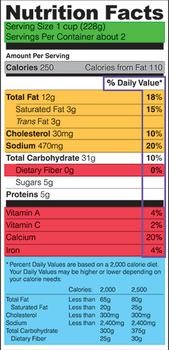 For a dietary item to be considered ‘high in fiber’ or ‘high-fiber’ by FDA standards, it must contain at least 20 percent of the recommended daily allowance per serving. If you see ‘good source of fiber’ on the nutrition label, this indicates a single serving of the food contains between 10 percent and 19 percent of the recommended daily allowance.
When assessing fiber-rich dietary choices be sure to compare apples to apples. Definitions on food labels depend on serving sizes, which are standardized according to food types. Similar types of food such as a slice of white bread and a slice of whole-wheat bread are more easily compared in terms of fiber and other nutrients. However, comparing a slice of bread to a one-cup serving of oatmeal is not so simple, because the amounts are different. Some excellent sources of fiber may not be labeled high in fiber, if the portion sizes are small.
If you’re not a math whiz, don’t sweat the details. Just remember low-fat, fiber-rich foods are great choices for losing or maintaining weight. And take a minute to share your favorite high-fiber foods. We all need encouragement to pursue a healthier diet.