
A favorite trends from the ’80s is making a comeback: women’s suits. Women’s suits look professional and, today, also look flattering and maintain femininity. They can be understated or flaunt some flair. But they’re called “power suits” for a reason. They evoke confidence and sophistication.
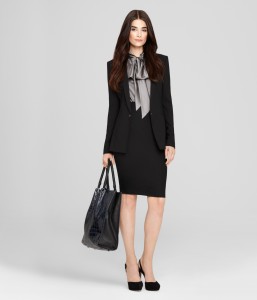 What styles are there? Women’s suits break down into three styles — the skirt suit, the pant suit and the three-piece set. Overstock.com breaks it down in a style guide on their site. The skirt suit is a classic suit jacket and coordinating skirt. The pant suit is inspired by menswear, with a tailored pant that is acceptable in all offices. Three-piece sets come with a jacket, pants and a skirt, a good option for women who don’t want to buy two different suits.
Be aware of the material you choose. Lighter fabrics, like cotton and linen, are for a business-casual dress code. Heavier fabrics in a traditional, non-trendy cut are more professional-looking. A single-breasted jacket is usually less dressy than a double-breasted jacket.
What kind should I get? “The most conservative answer here is a skirt suit,” according to Corporette. The older generation views a skirt suit as a sign of respect. Beyond that, it’s a matter of personal preference. The key is making sure it fits well. Often this means buying separates instead of sets.
What color do I wear? Try to stick with classic colors. Black, navy, gray and charcoal are good for your “it” suit. They’re also easier colors to break into separates. Brown, white, khakis and camels can be used occasionally, but they should not be your wardrobe staples, according to Lawyerist.
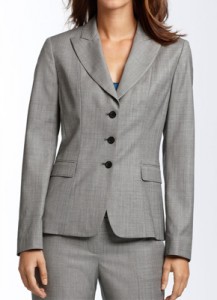 How should I tailor it? What’s the point of buying a suit that doesn’t fit?
This is an essential piece of looking put-together. Your suit needs to fit your shape and size. Jackets should sit comofrtably on your shoulders and reach your wrists and hips. Pants should be loose enough that you can fit two fingers under the waistband, advises Overstock. When tailoring a skirt, be careful of length. Avoid a mini-skirt at all costs, but also be careful of slits. If it reaches your mid-thigh when you sit down, it’s definitely unacceptable.
What do I wear under it? Skirts require a slip and pantyhose. Under the suit jacket, Corporette advises anything with sleeves. Wearing a camisole or “shell” means you’ll have to dryclean the suit jacket more often. The top shouldn’t be too frilly or too loud. “While prints are acceptable, the safest way to play it is probably to go with a solid color that flatters your skintone,” the article advises. Beware of styling your pant suit to look too much like a uniform. Sure, a white blouse under a black suit is fine, but it also can make you look like a waiter.
What accessories do I pair it with? Your suit is the important piece, and accessories should reflect the style of the suit. For shoes, stick with a flat, kitten heel or closed-toe pump you can walk in. Black and even burgundy are acceptable shoe color choices, notes Corporette. Your bag and jewelry should both be nondescript. Think black tote bag and a simple strand of pearls.
As always: remember that your attire plays a supporting role. It’s important to perfect your image and fashion choices to compliment the skills you bring to the office.