
How often do you hear the advice to “slow down” and “simplify”?
In today’s society, few things move at a slow pace, and there doesn’t seem to be much simplicity in the technology and gadgets streaming into our homes. Now think back a few years. OK, more like 10,000 years. Slowing down wasn’t only good advice; it was a way of life for our Paleolithic ancestors. And simplifying? That meant carrying one spear instead of two on the upcoming mammoth hunt.
While it may not be practical to live in a cave, we can learn valuable health lessons from our ancestors that are still relevant today.
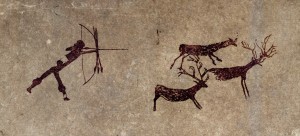 Is it possible to enjoy the health benefits of such a different lifestyle in the year 2012? Not only is it possible; but thousands of people are already doing it. They eat, move, and exercise like our ancestors would have. It’s called ‘living primal’, and just as there are guidelines for healthy living today, there were guidelines and suggestions for healthy living back then. What has changed as we’ve evolved; and what has stayed the same?
1. Then: If it’s alive or green, eat it! This basic guideline of eating animals, insects, and plants would have supplied the protein, nutrients and carbohydrates the Paleolithic people needed to sustain activity and life. Eating in such a way enabled their bodies to build strong muscle and maintain strong immune systems. They also stored up when food was in good supply, meaning they ate more than was needed to store the extra ‘fuel’ as fat. This prepared them for times of scarcity, when they could rely on fat stores for energy.
Now: If it’s alive or green, eat it! Eating good sources of protein, vegetables (a wide variety of colors) and fruit (mostly berries) gives your body what it needs to build strong muscles and a healthy immune system. You’ll notice this dietary guideline does not include grains, sugar or unnatural fats.
2. Then: Move around slowly. A lifestyle that involved looking for food for hours at a time would not have been considered fast-paced by today’s standards. Paleolithic people would have ‘exercised’ at more of a low-level aerobic pace; hunting, foraging, wandering, gathering, scouting, migrating, climbing. On average they probably did this kind of activity for three to four hours a day.
Now: Low-level aerobic activity is essential to burning fat and increasing strength and flexibility. Spend 2-5 hours per week doing activities that are slower paced, such as walking, biking, swimming or hiking. When possible, try to do these activities without shoes (or with minimal foot support) to develop and strengthen under-used muscles and tendons in the feet.
3. Then: Spend time lifting heavy objects. Carcasses had to be carried, babies had to be carried, boulders had to be lifted, spears and tools had to be moved about, logs and firewood needed carried. Get the idea? Without wheelbarrows or truck beds, the human body took the brunt of the work. These brief bursts of high-intensity exercise were good for increasing muscle size and fast-twitch fibers.
Now: Spend time lifting heavy objects. Literally! Any exercise regime will benefit from the inclusion of weight training. Two to three times a week incorporate weights into your work out, patterning the movements our ancestors would have made; twisting, lunging, pulling, squatting, pushing and jumping. By using large muscle groups instead of isolating specific muscles, the body consumes fat stores, increases bone density, and builds strength overall.
4. Then: Run like your life depends on it. Because most of the time, it did! Survival depended a great deal on the ability to run for and from prey. If a saber-toothed tiger were headed for you, you’d learn to sprint just as fast as you could. And chances are, every time this happened, you’d get just a little bit faster.
Now: Run like your life and heart and health depend on it. This type of exercise, also known as interval training, allows the body to use both slow and fast twitch fibers and helps burn stored fat by varying the heart rate. Try to do this type of cardio activity several times a week. Think of running at a slow jog for most of your work out, adding six to eight short bursts of all-out sprinting throughout your run. This also works for other types of cardio, such as spinning, swimming or elliptical.
5. Then: Sleep like a caveman. And how did they sleep? When the sun went down; not when the laundry was done, or when the paper was read, or when the house was clean. From the time the sun went down until the sun came up again, it was time to huddle in a clan and stay safe and recover from the day’s labors.
Now: During sleep our muscles are repaired and our energy is restored. This process is vital to maintaining a healthy body and immune system. In today’s fast-paced world there will always be work that needs done, even when the sun goes down. But just as it was 10,000 years ago, so it is today… that pile of to-do’s will still be there in the morning. Our Paleolithic ancestors probably didn’t feel guilty for sleeping when they needed to, and neither should we.
Life in today’s world probably won’t slow down anytime soon, but taking advantage of these time-tested Paleo principles can help you keep up!