
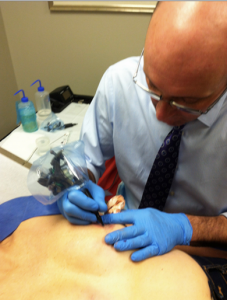
 Breast reconstruction surgery that restores the appearance of the breast including the anatomical features of the breast nipple carries an important psychological benefit.
In a story published in the The Salt Lake Tribune, many breast cancer survivors say that despite their fabulous reconstructive breast surgeries, something very important was missing. Survivors often say they just do not feel complete without a restoration of nipple tissue. When that’s not advisable due to health risks, there’s an alternative. Some women are electing to have a tattoo that darkens the area where there once was a functional nipple. The man responsible for this sense of restoration of what was lost isn’t an M.D. As it turns out, he’s a tattoo artist.
When breast cancer survivors who have endured mastectomies lose that darker-toned tissue, unless patients are candidates for a nipple-sparing surgery, they are left with “two colorless and scarred Barbie breasts,” as one survivor described it. The problem as we all know is that physicians are more interested in saving lives, and cancer cells can hide in nipple tissue.
And that’s where tattoo artist Vinnie Myers comes into the picture. The Maryland-based tattooist has been dubbed the “Michelangelo of nipple tattoos,” thanks to his 3D, extremely life-like renditions of nipples. What’s interesting is that Myers never set out to restore a natural appearance to the area scarred by surgery, but as it turned out he had a talent to reproduce a lifelike appearance that aided breast cancer survivors in their healing journey. He has proven to be so good with his lifelike tattoos that many plastic surgeons around the country recommended him to their patients. And the emotional outpouring he has received from grateful women was, in turn, extremely moving for him.
“For me, doing a small tattoo like that wasn’t a big deal,” Myers said. “But for these ladies, it’s life changing; they’re the toughest people on the planet … [and] …. I wasn’t prepared for the psychological impact on these women or on me.”