
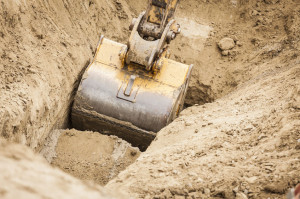
 When building trenches or doing excavating work, the safety of everyone involved must be of the highest priority. It is one of the more dangerous aspects of construction work, and preventing injuries can be achieved with the right training and forethought.
The federal Occupational Safety and Health Administration (OSHA) has several guidelines in place to help mitigate hazards in the workplace from trench and excavation work. In addition, Compliance Training Online has an online certification available to meet OSHA requirements for trench and excavation safety.
The most imminent threat relates to trenches and excavation is a cave-in. That’s why OSHA emphasizes the utmost care and safety. It starts with conducting a soil analysis to make sure employee protection methods are in place, including shoring, benching, sloping or shielding.
There can also be stuck-by hazards that come with this type of work, including falling loads, heavy equipment and public traffic that could be close to excavation. This also extends to potential hazards from nearby sidewalks or buildings that could affect safety, according to OSHA.
Overhead hazards from the atmosphere created by construction projects or from electrical work — and also underground power lines — should also be factored in to ensure a safe work environment.
OSHA has a five-point plan that identifies the most important aspects of excavation and trench safety
Ensure that there’s a safe way to enter and exit
Employers need to provide ramps, ladders, stairways or other safe ways for entrance and exit. This is to ensure quick escape from the excavation or trench if an emergency situation arises.
Ensure trenches have cave-in protection
Before they are built, trench sites should go through rigorous testing to make sure soil is appropriate and that protective systems can be constructed.
Look for standing water and test if atmospheric hazards may be present
Inspections should take place before construction begins daily before each shift, at points throughout the workday, if there is a rainstorm, or if vehicles or equipment approach the edge of the excavation.
Keep materials away from the edge of the trench
Spoils and equipment should be at least two feet from the protected excavation. Also, retaining devices that can be placed above the trench top need to be prepped and ready to prevent accidents.
Never enter a trench unless it has been inspected by a qualified person
Qualified people have been trained in protective systems, know about the OSHA requirements, and can evacuate workers if needed from the site to ensure hazards have been fully addressed.
Compliance Training Online offers a course on trenching and excavation safety for certification. Hazard correction, soil testing, protection systems and other safety requirements are addressed in detail. This training will benefit all employees and leadership who may be working in or around trenches or excavations.
To learn more about Compliance Training Online and how we can support your safety goals, go to our online course list.