
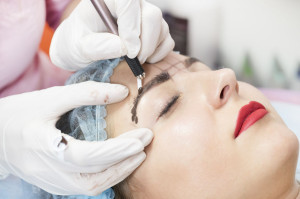
 When it comes to using brown pigments in permanent makeup or tattoos, things can get complicated quickly. That’s why as a tattoo artist, it’s important to understand how to stay out of trouble with brown pigments.
Most permanent makeup clients will ask for shades of brown when it comes to their eyebrows. If they’re blonde, they’ll typically ask for the lightest brown tones, and if their hair is dark, they’ll ask for a medium or dark brown.
That’s why, when selecting a brown pigment for your client, it’s important to use your past experience and knowledge to determine what effect the client’s skin tone will have in relationship with the pigment you are using. According to the Society of Permanent Cosmetics Professionals (SPCP), pigment plus skin tone equals a different appearance of the pigment you put in the skin. That’s not the only factor, though.
Needle configuration also has an impact on brown pigments. The smaller the needle configuration used for microblading, the ashier the healed brows will look, because smaller needles slice through the skin more effectively and generally place pigment deeper. According to the SPCP, the use of larger needle configurations have less of a “slicing” effect and place the pigment slightly closer to light and farther from a direct relationship with the bloodstream, which causes the color to look less dark and less cool.
Properties of brown pigments also come into play when decided which shade of brown to use for each client. Basic color theory teaches that opposites on the color wheel neutralize, meaning if a client’s skin tone is red, the best selection is a green or green-yellow-based brown. If a client’s skin tone is olive, then the neutralizing brown color would have more red in it.
Judging the base of any pigment can be difficult if a corresponding pigment base information sheet is not provided. However, at Face and Body Professionals, this type of information is always provided to ensure the best possible customer service. Most manufacturers should and do provide pigment guideline charts.
- When it comes to the chemistry of brown pigments, take a look at the Earth. There are several browns that come directly from the Earth, including raw umber and raw sienna. But browns can also be made from primary and secondary colors mixed to produce a tertiary color. Browns can also be made from blacks, yellows, and coppers or reds.
Ultimately, it’s important for every tattoo artist and permanent makeup technician to develop the skills necessary to combine the concepts of color theory with brown color selection and skin tone determination. Lastly, establishing a good relationship with your pigment manufacturer is the final step necessary to make sure you understand the brown pigments you’re using on clients. Visit our website here: Face and Body Professionals to learn more about the brown pigment options we carry.