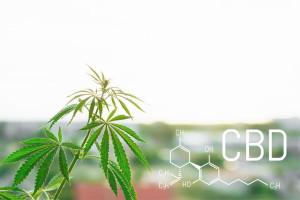
 Cannabidiol, or CBD, is everywhere these days. You can find it at your local grocery store, pharmacy or pet store. It’s added to a variety of products, including joint salves, carbonated beverages and dog treats. You can even order CBD in its natural form with tinctures, oils,or gummies. No matter your needs or personal preference, CBD is easy to access and incredibly affordable. But it wasn’t always that way.
Up until just a few years ago, hemp and hemp extracts (including CBD) were illegal under federal law. That all changed with the passage of the 2018 Farm Bill. This groundbreaking law legalized the production of hemp and hemp extracts, paving the way for an industry that’s currently worth approximately $1.8 billion.
With all of the recent news surrounding CBD, you might assume that it’s only been around for a few years. But that’s far from the case. In fact, archaeologists have uncovered evidence that humans were farming hemp more than 12,000 years ago. Surprisingly, CBD wasn’t discovered until much later by Harvard chemist Roger Adams.
In 1939, Adams received a license from the Treasury Department to write a paper on the “Chemistry of Marijuana.” The Department of Defense took great interest in Adams’ work, thinking his research might uncover a “truth serum” that could be used during World War II. Although the truth serum never came to fruition, Adams did discover THC (the psychoactive ingredient in marijuana) as well as a way to isolate CBD. Ultimately, his discovery led to a patent and a whole cottage industry of marijuana research.
Things didn’t really take off until several years later, in 1946. That year, scientist Walter S. Loewe began testing CBD on animals in a laboratory setting. His goal? To determine if CBD caused a “high.” About 15 years later, in the early 1960s, an Israeli scientist named Ralph Mechoulam identified CBD’s unique chemical structure. Mechoulam also found a way to isolate THC, a discovery that the National Institutes of Health was fascinated by.
Dr. Mechoulam’s research triggered a worldwide interest in hemp research. By the 1960s, scientists were testing CBD’s effects on large primates and trying to determine if it had any medicinal properties. In the early 1980s, Dr. Mechoulam made another breakthrough, discovering that CBD could ease the underlying mechanisms responsible for epilepsy.
Nowadays, CBD is all around us. By 2030, industry experts predict it will account for more than $80 billion in sales. If you’re interested in developing or manufacturing your own CBD products, now is the perfect time to get involved. At HempNectar, we have the tools and experience to dry and mill hemp and extract CBD. To learn more about our capabilities, click here.