
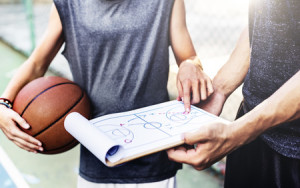
 High school basketball players know the basic things to say and do that will keep them in the good graces of their coaches. Don’t talk back. Be a good teammate and a good sport. Don’t criticize other players. Say “yes, sir,” “yes, ma’am” or “yes, coach” when acknowledging an instruction.
However, even though your words may be signaling respect, your body language may be saying something else. And don’t fool yourself: Coaches notice when you appear not to be interested—despite the fact you might be listening. The tricky part for many players is they don’t even realize their body language is sending a negative message. Here are some common body language mistakes to think about during practice and games:
- Folded arms: You may be just resting your arms during a break, but folding them can tell your coach what he or she is saying isn’t important or feels boring. Next time, keep your arms at your side or on your head (if you are especially tired during a break—this helps with deeper breathing and shows your coach you’ve been working hard and are preparing to continue that when play resumes).
- Eye-rolling and grimaces: You don’t have to say a word to unintentionally show that you are displeased with your coach. Rolling your eyes, scowling, and otherwise looking visibly annoyed with an instruction or decision (say, being taken out of the game) can anger your coach. Along the same lines, these actions with referees can be even more damaging—you never want a ref thinking you’re a punk because you rolled your eyes after a call you disagreed with.
- Leaning against a wall: During practice, if you are not immediately part of a new play being taught, stand intently on the sideline to show you want to learn. Moving too far away from the court—perhaps to lean against a wall or folded bleachers—gives the impression you don’t care whether you are put back into the play or not.
- Not looking into your coach’s eyes: We get it—your first reaction to being chewed out is to look down or away. No one likes being yelled at, but show your coach you respect why it’s happening by keeping eye contact, not making a grimace during the moment, and replying “Yes, coach,” when he or she is done.
One other thing: Focusing on your body language keeps you extra focused during practice and games. That won’t go unnoticed by your coach and can only make you a better player in the long run.
Like this post? Check out more articles and tips on our Facebook Page