
 What kind of growth should we expect in GDP? Should unemployment be used as a benchmark for policy decisions? Will inflation lead to a change in monetary policy?
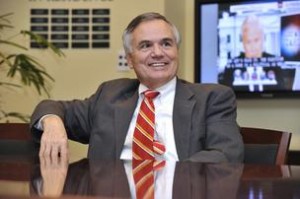
Great questions as we approach the upcoming Rocky Mountain Economic Summit. Here are some observations from Wells Fargo Chief Economist John Silvia, who will be speaking at our summit on July 12th in scenic Jackson Hole, Wyo.
On Growth:
For the past three years, and we expect for this year as well, real GDP in the United States has grown at a two percent pace, and this should give us pause. The economy appears to have tracked a steady pace of growth, yet policymakers and some commentators are searching, and promoting, the case for an acceleration of growth in the face of evidence that the economy has settled in at a two percent pace—given the current condition of the credit market. This is important to emphasize. The real economy and the credit markets are not independent entities and the higher degree of regulation, capital requirements and credit standards post the Great Recession should signal to observers that the sustainable pace of economic growth may be more modest than some estimate. Finally, basing today’s policy on a model of an economy that may be outdated reflects an anchoring bias in decision making that will lead to poor decisions.
On Unemployment:
For investors and decision makers, the focus on an explicit unemployment rate as a benchmark for policy decisions appears to some as misplaced given the dynamic nature of the labor market, and that the character of the labor market seems different today than in the past. Moreover, recall that the unemployment rate is a lagging economic indicator—not a leading indicator. While the U-3 unemployment rate of 6.5 percent may not be a trigger to change policy, it still may be misleading given evidence of structural change in the labor market, as well as a long history of research that suggests that the long-term trend of unemployment remains independent of the influence of monetary policy.
On Inflation:
Inflation expectations are rising but not at the pace that would likely prompt any change in monetary policy soon. Whether these patterns suggest that inflation expectations are well-anchored is another issue. More important for decision makers, the recent pattern of rising inflation expectations, although modest, intimate that nominal yields may not cover the actual inflation experience over time and that must be brought into the investment calculus.
If you’d like to take a look at Silvia’s complete analysis, here’s the report.