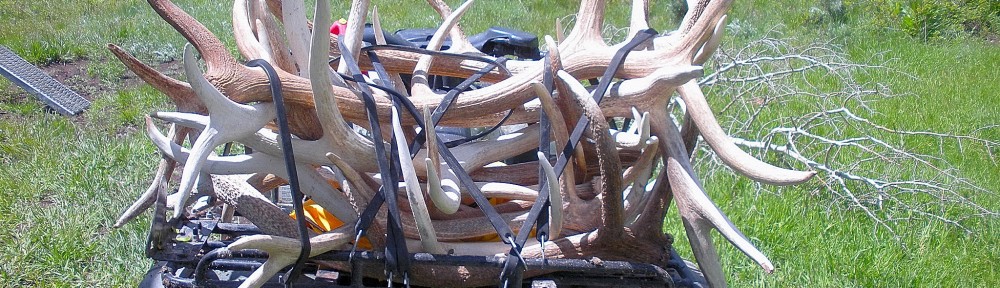
Each year bucks and bulls cast their antlers and these oft-coveted discards of nature bring in the bucks for shed-antler hunters. For both the fall and spring antler hunts expect to do a lot of hiking, searching and exploring to claim your prize. In fall, you’ll find flesh and blood antlers, while in spring the prize is bone alone.
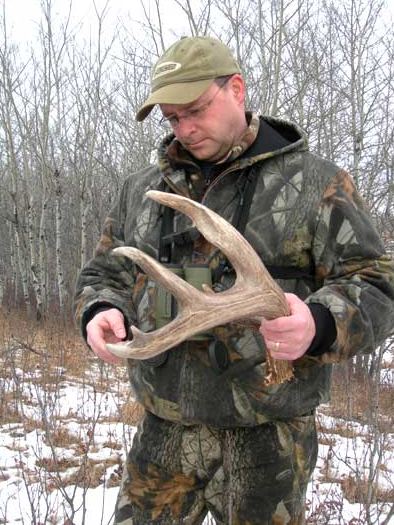
If you plan to trudge for miles through wild country, you want the hunt for shed antlers to be successful. Just as in the fall hunt the key to success is pre-season scouting. You have to find those places where the bachelors hang out. No matter how good you are at finding sheds you won’t find them where the males haven’t been.
Start with following tracks. Winter snowfall and spring rains reveal a record of those hoof prints.
Follow game trails. Because of the physical stresses caused by bitterly cold weather, wintering bucks and bulls will not travel long distances, except for the initial migration. Daily movements will alternate between feeding and bedding areas. Spend your time where the greatest number of bucks and bulls spend their time in late winter and spring.
Your eyes can cover an area a lot easier than your legs. Find an overlook and then let your eyes do the walking. You will need good optics to distinguish an antler from a branch so don’t skimp on binoculars or a spotting scope. When glassing an area keep the sun at your back. This prevents lens glare and enables you to pick up any glint of light that’s reflecting from the antler’s polished surface — a characteristic that will help you distinguish an antler from a tree branch.
Most antlers will be found in feeding areas as grazers and browsers repeatedly raise and drop their heads to alternately feed and scout. Gravity, momentum and head movement work hand-in-hand to loosen the headgear.
After a thorough search of a feeding area, the next place to search is the trail between the animal’s feed and bed. Walking, trotting and running often wrench off those racks.
Pay special attention to fence lines on or near game trails. Any time an animal jumps a fence the impact on the opposite side can pop an antler off. Ravines, gullies or ditches are key areas of the game trail that may harbor the treasure you seek. If an animal jumps, stumbles or loses its balance, it puts a strain on the antler-skull connection. An equally important stretch of the game trail will be through areas in which the game trail runs through tight timber and woodland. Those areas often prove fruitful for shed antlers, as the animal’s rack may contact overhanging branches or scrape the edges of narrow trails.