
In most states where cougars or mountain lions are hunted, there are seasons for both pursuit and harvest. For the sportsman who really wants to tree or harvest a cougar, there’s only one way to go, and that’s chasing them with hounds. Spot-and-stalk lion hunts result in a lot of stalking but little spotting.
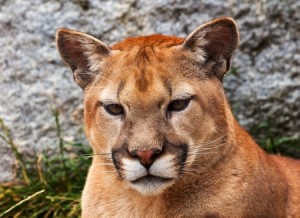 A hound-assisted lion hunt begins before dawn after a snowfall. Mountain roads are combed in search of a track. Any lion tracks are closely examined for size and evidence of an accompanying juvenile or kitten. If it’s large, then the dogs are radio-collared and turned loose. The chase is on!
It’s impossible to keep up with hounds in rugged terrain, but sometimes you don‘t have to. That’s when a cat doubles back, saving a hunter thousands of steps. Experienced houndsmen learn common escape strategies and know the hunting unit well enough to predict where the cat will run. Sometimes, a houndsman can reach the cat almost as fast as the hounds.
Nothing beats the rush that comes from a lion chase. It’s a game of strategy as you second-guess the lion’s game plan. The baying of hounds communicates a lot of information about the hunt–whether a track is hot or lost or if a cat has been treed or cornered.
Nothing compares to the exhaustion that follows a lion hunt. Hiking in knee-deep snow over rough, broken terrain is a muscle burner. Lions like boulder fields, windfalls and escarpments. An adult lion doesn’t make itself easy to follow.
A successful hunt ends with a cat in a tree or on the ground. You get a pelt and/or photos. Although you hope for a successful end to the hunt, the excitement is really in the chase. You actually don’t have to harvest a lion to have experienced one of the most exciting days of your life!