
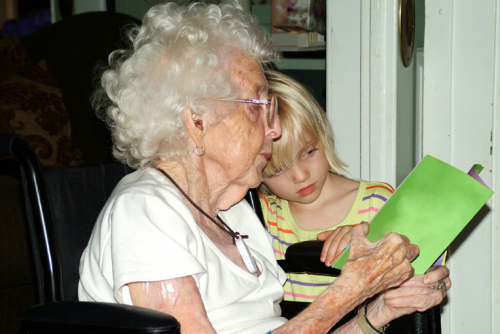
 Because your mother always took care of you, coming to terms with her need for elder care often presents a psychological hurdle. It requires a shift to seeing your mom with a different set of eyes and that has proved to be a difficult transition for many Baby Boomers. Yet seeing your parent with objective eyes is critical to ensuring a safe home life. Avoid the voice of denial, which whispers in your ear that “Mom is doing fine. She doesn’t need help with daily life tasks.” Document your parent’s ability to manage their affairs through careful observation and keeping notes.
The first issue to rise is often housework, particularly if your parent appears to be experiencing declining physical or mental health. For women born in the years before and during World War II, the role of homemaker was prominent despite the legions of Rosie the Riveters who worked in factories. Remember that when the men returned home from the front lines, many a “Rosie” returned to her role as a stay-at-home mother.
It’s hard for a woman to face relinquishing a role that gave her a strong sense of identity and provided years of satisfaction in caring for a family. That’s why it’s crucial to tread carefully when discussing these issues with an elderly parent. It may not help your aging mother’s emotional health if you tell her to refrain from a particular housekeeping task. Why? As it turns out, having a sense of purpose proves vital to an elder’s health.
A sense of control is also important for seniors, so give your mother opportunities to contribute to some light housekeeping tasks. For example, aging parents may enjoy dusting knickknacks, but pushing a vacuum cleaner could pose a tripping hazard should feet be caught up in a tangled cord.
If your parent resists your suggestions for bringing in a home-health nurse, gently and firmly remind your mother how wonderfully she cared for you. Tell her you are determined to care for her in the same fashion. Expect such negotiations to arise more frequently as an aging parent’s health declines over time.
Preserve as many daily activities as you can for as long as possible when planning home care for an aging parent. Bring Mom or Dad to a health professional every six months for a mental and physical checkup and even sooner, should you observe a sharp decline in health. Those little lapses in memory could be adding up to something more serious.
Don’t be afraid to take an active role in advocating for your parents, particularly if you have nagging concerns. It just might be time to bring in a professional caregiver.